
Vijaya Dashami: When the Goddess Leaves, and Bengal Learns the Art of Letting Go
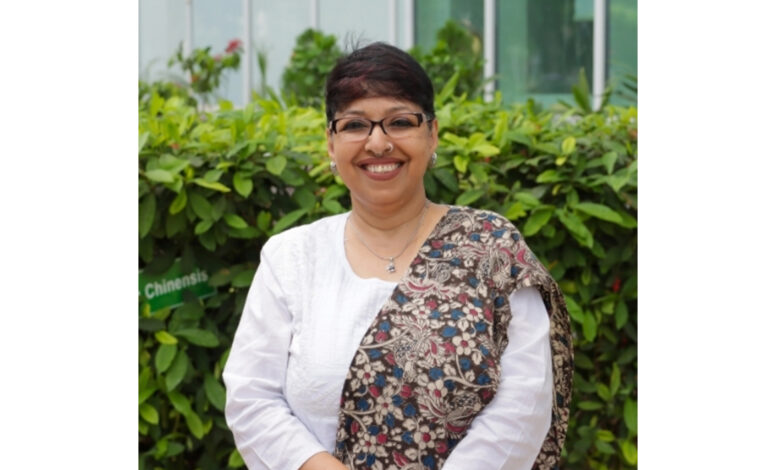
Dr Srabani Basu, Associate Professor, Department of Literature and Languages, SRM University AP
There is a peculiar silence that descends upon Bengal on Vijaya Dashami. It is not the absence of sound. The dhak continues to thunder, conch shells reverberate through the pandals, and the streets remain crowded with devotees accompanying the Goddess on her final journey. Yet something has changed. The anticipation that began with Mahalaya, the ceremonial welcome of Shashthi, and the magnificent celebrations of Saptami, Ashtami, and Navami have reached their inevitable conclusion. The Goddess who was so eagerly awaited must now depart.

For Bengal, Dashami is not merely the tenth lunar day of Devi Paksha. It is the day when a theological paradox becomes an intensely human experience. Durga, the invincible destroyer of Mahishasura, is ceremonially bid farewell like a married daughter leaving her parental home. The Mother of the Universe becomes Uma, whose departure leaves Menaka inconsolable. The Goddess who restores cosmic order cannot be persuaded to remain another day.
Why should a festival celebrating divine victory conclude in tears? Why is the image of an omnipresent Goddess immersed in water? Why do women exchange vermilion before bidding farewell to a deity whose power transcends the conventions of marriage? And why does Bengal call this day Vijaya, or victory, when its most recognisable emotion is separation?
The answers reveal the extraordinary complexity of Bengali Durga Puja. Dashami brings together the theology of the Devi Mahatmya, the ritual significance of Visarjan, the cultural history of Uma’s homecoming, the symbolism of Sindoor Khela, and the philosophical relationship between attachment and impermanence.
The Sanskrit word Dashami refers to the tenth lunar day of the bright fortnight of Ashwin. Across India, Vijayadashami is celebrated through distinct traditions. In several regions, Dussehra commemorates Rama’s victory over Ravana, while elsewhere the day is associated with the triumph of the Goddess over Mahishasura, the worship of implements, or the auspicious commencement of learning. These traditions reflect the plurality of Hindu religious life rather than a single uniform narrative.
In Bengal, the theological foundation of Durga’s victory is closely associated with the Devi Mahatmya, incorporated into the Markandeya Purana and generally dated to approximately the fifth or sixth century CE. As Thomas B. Coburn explains in Devi-Mahatmya: The Crystallization of the Goddess Tradition (1984), the text establishes the Goddess as an autonomous divine power capable of defeating adversaries whom the gods cannot overcome.
Chapter 3 narrates the destruction of Mahishasura, while subsequent chapters describe confrontations with Raktabija, Nishumbha, and Shumbha. Importantly, the text does not establish a universally authoritative chronology placing Mahishasura’s death precisely on Dashami. The association of Vijayadashami with divine victory belongs to the broader festival tradition.
In Chapter 11, the gods praise the victorious Goddess through the Narayani Stuti, recognising her as the source of protection and cosmic order. Chapter 12 emphasises the enduring significance of her worship, particularly during the great autumnal celebration. The theological implication is compelling: divine power is neither exhausted by a single victory nor confined to one ceremonial manifestation.
This understanding becomes particularly significant during Visarjan, the concluding ritual of Dashami.
A distinction must be made between the ceremonial withdrawal of the Goddess’s invoked presence and the physical immersion of her image. At Belur Math, for instance, Dashami worship includes a brief puja, Shital Bhog, arati, and the formal Visarjan rites before the image and Nabapatrika are taken for immersion. The Goddess is respectfully entreated to return to her divine abode, but her existence is not understood to terminate with the dissolution of the image.
The clay image is a consecrated medium through which the divine has been approached. Its immersion does not signify the destruction of the Goddess. Rather, the temporary material form is relinquished while the divine reality is understood to endure.
Here lies one of Dashami’s most profound philosophical possibilities.
Human beings create a form through which they encounter something believed to transcend form. They invest that image with devotion, affection, ritual attention, and emotional significance. Then, at the culmination of the celebration, they deliberately relinquish it.
The act challenges one of our most persistent tendencies: the desire to preserve what we love by retaining its physical presence.
Dashami reminds us that presence and possession are not synonymous.
The Goddess may be loved without being permanently confined within an image. Her departure does not invalidate the relationship established through worship. The clay returns to water, but devotion continues.
UNESCO’s recognition of Durga Puja in Kolkata as Intangible Cultural Heritage in 2021 acknowledges the festival’s distinctive cycle of image-making, worship, and immersion. Traditionally fashioned from unfired clay, the image returns to the elements from which it emerged.
Yet this symbolism also invites environmental responsibility. Synthetic paints, chemical pigments, and non-biodegradable decorations can damage aquatic ecosystems. If the Goddess represents the power sustaining existence, reverence for her should extend to the natural world. A ritual celebrating life’s continuity becomes ethically contradictory when its performance endangers the conditions that sustain life.
Before immersion, many Bengali households and community pujas observe Devi Baran, the ceremonial farewell offered to Durga through auspicious substances, sweets, vermilion, and prescribed gestures. Its emotional significance emerges from Bengal’s extraordinary transformation of the cosmic Goddess into Uma, the married daughter returning to her parental home.
The Bengali Agamani and Vijaya song traditions, particularly those associated with eighteenth-century Shakta devotional poetry, portray Menaka’s longing for her daughter. She worries about Uma’s circumstances in her husband’s household, rejoices at her arrival, and grieves when the time comes for departure.
The narrative reflects historical patterns of patrilocal marriage, when daughters frequently left their parental homes and returned only for temporary visits.
Yet an uncomfortable contradiction lies beneath its tenderness.
Durga is the supreme power who defeats Mahishasura. Her strength exceeds that of the gods. Nevertheless, Bengal imagines her as a daughter whose stay in her parental home must end.
The Goddess can conquer a demon, but the social imagination does not permit her to remain indefinitely with her mother.
This paradox reveals how mythology can simultaneously transcend and reproduce the social structures within which it develops. The homecoming tradition celebrates maternal affection while preserving the emotional consequences of a society in which marriage frequently redefined a woman’s right to belong.
Why must a daughter become a guest in the home where she was born? Why should marriage determine the boundaries of her belonging?
These questions do not diminish the beauty of Uma’s homecoming. They reveal the historical tensions that give the tradition its emotional intensity.
Another distinctive expression of Dashami is Sindoor Khela. Traditionally, married Bengali Hindu women apply vermilion to the Goddess and subsequently to one another, celebrating marital auspiciousness and well-being. The sight of women in red-bordered white saris, their faces marked with sindoor, has become an iconic image of Vijaya Dashami.
Yet the practice raises questions about feminine identity and marital status.
Historically, sindoor has been associated with women whose husbands are living. Consequently, widowed, unmarried, and divorced women have often occupied different positions within rituals centred upon marital auspiciousness.
The contradiction is striking. A culture that worships Durga as an independent divine power also preserves customs in which feminine auspiciousness is mediated through marriage.
The Goddess does not derive her cosmic authority from her husband. Why, then, should participation in celebrating feminine divinity depend upon a woman’s marital circumstances?
Some contemporary celebrations have expanded Sindoor Khela to include women irrespective of marital status, while others retain customary restrictions. These changes reveal an ongoing negotiation between inherited practices and evolving understandings of dignity and inclusion.
The question is not whether tradition must be discarded, but whether its expressions can accommodate the humanity of those historically excluded.
A widow does not lose her dignity when her husband dies. An unmarried woman does not lack completeness. A divorced woman does not become less worthy of celebration because a relationship has ended.
The worship of feminine power acquires greater ethical significance when reverence extends beyond the ceremonial image to living women.
Dashami also marks the beginning of Bijoya greetings. Younger people seek the blessings of elders, while friends and relatives exchange embraces, sweets, and good wishes. At Belur Math, Shanti Jal, water associated with the immersion, is sprinkled upon devotees, who embrace one another as children of the Divine Mother.
The transition is remarkable.
The Goddess departs, but human relationships become the immediate focus of attention.
Yet what is the significance of exchanging embraces if resentment, prejudice, and hostility remain untouched? Reconciliation requires more than ceremonial goodwill. It demands acknowledgement of injury, compassion, and the willingness to reconsider assumptions. Not every damaged relationship should be restored, but Bijoya offers an opportunity to distinguish genuine reconciliation from social performance.
Perhaps the most poignant dimension of Dashami, however, is its relationship with impermanence.
The flowers will wither. The pandals will be dismantled. The magnificent image, which has occupied the centre of collective devotion, will disappear beneath the water.
The festival is constructed around the certainty of its own conclusion.
In a world where human beings continually seek permanence in relationships, identities, and experiences, immersion offers a different possibility: meaning may survive the disappearance of form.
This distinction becomes devastatingly personal within Bengal’s homecoming narrative.Durga returns every year.Human beings do not.
The story of Uma returning to Menaka assumes the existence of a parental home and a mother waiting to welcome her daughter. But what happens when the mother is no longer there? What happens when the house remains, but the people who made it a home have disappeared?
A daughter may return to the place of her childhood only to discover that the home she remembers now exists within her memory.
The Goddess’s annual separation is made bearable by the promise of reunion. Human grief does not always offer such reassurance.
Yet relationships may continue to shape identity even after physical separation becomes irreversible. Dennis Klass, Phyllis Silverman, and Steven Nickman, in Continuing Bonds: New Understandings of Grief, challenged the assumption that healthy grieving necessarily requires severing emotional connections with the deceased. Their work suggests that relationships can endure through memory, inherited values, and continuing meaning-making.
Dashami offers an evocative cultural analogy. The physical image disappears, but the relationship it represented continues.
Theological belief and psychological research are distinct explanatory frameworks. Nevertheless, both invite reflection upon a deeply human question: how can love endure when its familiar physical expression is no longer available?
The Bengali refrain Asche bochhorabarhobe…the celebration will return next year, does not deny the sorrow of farewell. It places that sorrow within a rhythm of anticipation and renewal.
The tears of Dashami do not signify the failure of celebration. They testify to the depth of attachment.
Joy and grief are not mutually exclusive. Gratitude can coexist with loss. A farewell can be both painful and necessary. Dashami embodies these contradictions without attempting to resolve them.
But the festival also leaves behind an ethical question.What does victory mean after the Goddess has departed?
The Devi Mahatmya celebrates the defeat of destructive forces, yet the world outside the pandal continues to struggle with violence, exploitation, inequality, and prejudice.
The Goddess may have defeated Mahishasura, but human beings continue to create conditions in which cruelty and domination flourish.
The mythology becomes ethically meaningful not when we identify other human beings as demons, but when we examine the destructive tendencies within ourselves and our institutions.
Arrogance does not disappear because a ritual has concluded. Prejudice does not dissolve because an image has been immersed. Worshipping feminine power does not automatically guarantee respect for women’s autonomy.
And exchanging Bijoya greetings does not, by itself, create a compassionate society.
The distinction between celebrating an ideal and living according to it is perhaps the most urgent lesson of Dashami.
During the festival, divine power is represented through a magnificent image. On Dashami, that visible focus is withdrawn. What remains is the responsibility of those who worshipped her.
If Durga represents courage, the responsibility to confront injustice remains. If she represents protection, the responsibility to protect the vulnerable remains. If she represents feminine sovereignty, the responsibility to recognise women’s dignity and autonomy remains.
The ritual has ended. The ethical challenge has not.And somewhere within the Bengali imagination, Menaka watches Uma disappear from sight.
The river receives the clay. The drums gradually fall silent. The crowds begin to disperse.
Yet the Goddess’s departure offers one final lesson: what is meaningful cannot always be possessed, what is loved cannot always be retained, and what has been learned must eventually be lived.
The victory of Durga over Mahishasura belongs to the sacred narrative. The victory over indifference, cruelty, prejudice, and domination belongs to human responsibility.
Perhaps the most unsettling question of Vijaya Dashami is not why the Goddess must leave, but whether, after bidding her farewell with tears, we have allowed anything of her courage, compassion, and sovereignty to remain within us.
As the waters close over her departing image, Bengal whispers its familiar promise.
Asche bochhorabarhobe.
She will return.
But when she does, will she find us any different?