Panchami: The Day Before the Goddess Awakens, When Anticipation Becomes a Celebration
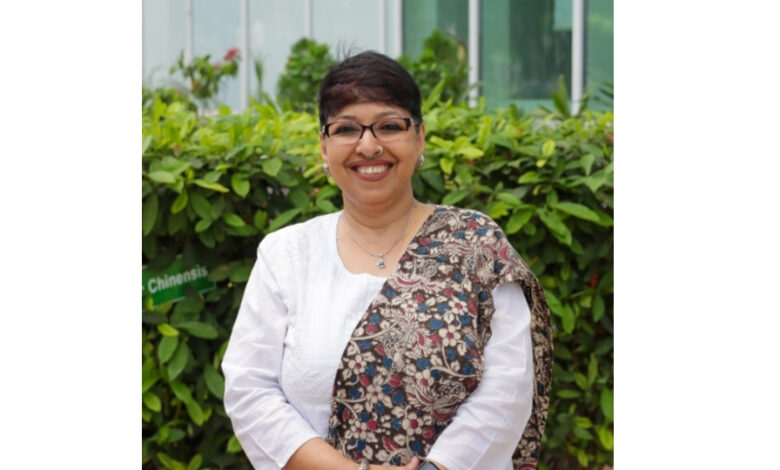
Dr Srabani Basu, Associate Professor, Department of Literature and Languages, SRM University AP
Between the remembrance of Mahalaya and the sacred awakening of Shashthi lies Panchami, a day that reveals how Bengal transforms the anticipation of divinity into an extraordinary cultural experience.

There is a peculiar magic about the days preceding Durga Puja in Bengal. The Goddess has not yet been formally awakened through the principal rituals of Shashthi, the elaborate worship of Saptami has not begun, and the magnificent ceremonies of Ashtami and Navami are still ahead. Yet the city is already transformed. The fragrance of shiuli flowers mingles with the autumn air, the unmistakable rhythm of the dhak announces the approaching festivities, and people move through streets illuminated by pandals that have gradually become works of extraordinary artistic imagination. Somewhere in Kumartuli, an artisan makes a final adjustment to the Goddess’s ornaments. Elsewhere, a child tries on new clothes, while an elderly woman remembers the Panchami evenings of a childhood that now survives only in memory.
This is Panchami, the fifth lunar day of Devi Paksha, a day that occupies an intriguing position in Bengal’s Durga Puja. Unlike Shashthi, Saptami, Ashtami, Navami, and Dashami, Panchami does not possess an equally prominent, universally prescribed set of public ceremonies within the familiar five-day Bengali festival sequence. Yet its cultural importance has grown considerably, particularly with the expansion of community Durga Puja and the transformation of Kolkata and other Bengali urban centres into enormous spaces of public art and celebration.
Why, then, does Panchami matter? Is it merely a convenient day for completing preparations and visiting pandals before the crowds become overwhelming? Or does it possess a deeper relationship with the ritual calendar, the history of autumnal Goddess worship, and Bengal’s distinctive understanding of sacred anticipation?
The answer requires us to distinguish carefully between scriptural prescription, regional ritual practice, and the cultural meanings that communities create around religious festivals. Panchami is particularly fascinating because its contemporary significance cannot be understood solely through the rituals performed on that day. It must also be understood through the experience of waiting, the labour of preparation, and the transformation of an ordinary city into a temporary sacred landscape.
The religious significance of Panchami begins with its position in the lunar calendar. The Sanskrit word Panchami means fifth, and the day falls on the fifth tithi of the waxing lunar fortnight, or Shukla Paksha, during the autumnal festival cycle. A tithi is determined by the angular relationship between the sun and the moon rather than by a fixed twenty-four-hour period. Consequently, its beginning and end do not necessarily coincide with sunrise or midnight. This distinction becomes important when determining the timing of religious ceremonies, particularly those performed near the transition from Panchami to Shashthi.
In the broader Navaratri tradition, the fifth day is commonly associated with Skandamata, one of the nine forms of Durga collectively known as Navadurga. Skandamata is the mother of Skanda, also known as Kartikeya or Kumara, the warrior deity associated with the destruction of destructive forces. Her iconography commonly depicts her holding the child Skanda, seated upon a lion or represented upon a lotus, depending on the tradition. She is therefore associated with maternal protection, compassion, and divine strength. However, the worship of Skandamata on the fifth day of Navaratri should not be confused with the principal ritual structure of Bengali Durga Puja. The Navadurga sequence is especially prominent in several North Indian devotional traditions, while Bengal’s autumnal worship follows its own distinctive ceremonial practices.
Nevertheless, the association with Skandamata offers an intriguing point of comparison. The fifth day of Navaratri foregrounds the Goddess as a mother, while Bengali cultural imagination increasingly experiences Panchami as the eve of the daughter’s ceremonial welcome. The same divine feminine is thus approached through different relationships. In one tradition, she protects her child. In another, she is herself the daughter whose arrival is eagerly anticipated. This is not evidence of a common scriptural explanation for both observances, but it demonstrates the remarkable flexibility of Hindu devotional imagination.
To understand Panchami’s place within Bengali Durga Puja, one must turn to the ritual transition that occurs on Shashthi. Traditional ceremonies such as Kalparambha, Bodhan, Amantran, and Adhivas are generally associated with the sixth lunar day. Kalparambha marks the formal undertaking of worship, Bodhan symbolically awakens or invokes the Goddess, Amantran constitutes her invitation, and Adhivas establishes her presence within the ritual setting. The ceremonies are associated with the commencement of the principal worship that continues through Saptami, Ashtami, and Navami.
Panchami’s significance is therefore partly defined by its relationship with these ceremonies. It is the day before the Goddess is formally welcomed in the most familiar Bengali sequence. Yet the boundary is not always absolute. The ritual known as Bilva Nimantran, involving the ceremonial invitation of the Goddess in association with the bilva or bel tree, is ideally performed when Shashthi coincides with the prescribed evening period. When that combination is unavailable, ritual calculations may place the ceremony on the preceding evening, during Panchami, according to the applicable calendar and tradition.
This detail is particularly important because it prevents us from making the inaccurate claim that Panchami is invariably devoid of religious ceremonies. Its ritual significance can vary according to the relationship between lunar tithis and prescribed ceremonial times. Hindu ritual calendars are not simply sequences of numbered dates. They are systems through which astronomical calculations, religious prescriptions, and inherited practices determine when particular acts should be performed.
The association of Bilva Nimantran with the bilva tree introduces another dimension. The Goddess is invited through a living element of nature before the subsequent rituals establish her presence within the ceremonial environment. This association reflects the broader importance of sacred vegetation in Hindu worship. The bilva tree, particularly revered in Shaiva traditions, also occupies a significant place in Shakta ritual practices. Its presence reminds us that the sacred landscape of Durga Puja extends beyond the sculpted image and the decorated pandal. Trees, water, earth, flowers, and leaves participate in the religious process through which the Goddess is honoured.
Panchami also belongs to a much longer history of Bengali autumnal worship. The Devi Mahatmya, incorporated into the Markandeya Purana and generally dated by scholars to approximately the fifth or sixth century CE, provides one of the most influential theological foundations for the worship of the Goddess. Thomas B. Coburn’s Devi-Mahatmya: The Crystallization of the Goddess Tradition (1984) demonstrates the importance of this text in the development of the Goddess as a supreme divine power. Yet the text should not be treated as a source for every ceremony or cultural practice associated with contemporary Bengali Durga Puja. The festival has developed through the interaction of Puranic traditions, regional ritual manuals, Shakta devotional literature, household customs, and community celebrations.
This distinction is especially relevant to Panchami. Its present-day prominence is not necessarily evidence that it possessed an equivalent position in earlier ritual traditions. Rather, its increasing visibility reflects the changing social organisation of Durga Puja itself.
Historically, elaborate Durga Puja celebrations were closely associated with royal, aristocratic, and wealthy household patronage. Over time, community-organised celebrations transformed the festival into an increasingly public event. The emergence and expansion of barowari and sarbojanin pujas created new opportunities for collective participation, artistic experimentation, and civic engagement. The religious ceremonies remained important, but the festival gradually acquired a cultural life that extended beyond their prescribed duration.
This transformation helps explain why Panchami has become such a recognisable part of contemporary celebrations. As pandals grew more elaborate and public participation expanded, the days preceding the principal rituals acquired greater social importance. Organisers began opening installations earlier, allowing visitors to experience the artistic displays before the largest crowds gathered. The result is that Panchami has become, for many people, an unofficial beginning of the festivities.
The distinction between ritual commencement and cultural commencement is crucial. A pandal may be inaugurated, illuminated, and opened to visitors before the formal worship of the Goddess begins. The presence of a completed image does not automatically mean that all prescribed rituals of invocation and consecration have been performed. The artistic exhibition and the religious ceremony operate within overlapping but distinguishable frameworks.
UNESCO’s inscription of Durga Puja in Kolkata on the Representative List of the Intangible Cultural Heritage of Humanity in 2021 provides an important foundation for understanding this development. UNESCO recognises the festival as an extraordinary example of the public performance of religion and art, involving collaborative artistic production, elaborate temporary structures, traditional craftsmanship, and widespread community participation.
Panchami offers an especially interesting opportunity to observe this relationship between art and devotion. The completed pandals are not merely decorative settings for religious ceremonies. They represent months of planning, creative experimentation, and skilled labour. Sculptors, painters, electricians, carpenters, designers, textile workers, and countless others contribute to their construction. What visitors encounter on Panchami is often the culmination of an enormous collective undertaking.
This raises a question that deserves attention. When does the festival actually begin? Does it begin when the priest performs the first prescribed ceremony, when the sculptor begins shaping the clay, when the first bamboo poles are erected, or when the community starts preparing for the Goddess’s arrival?
The ritual calendar provides one answer. The social history of the festival provides another.
For the artisan, Durga Puja may begin months before Panchami. For the organiser, it begins with planning and fundraising. For the devotee, it may begin with Mahalaya. For the child waiting to wear new clothes, it begins when anticipation becomes almost unbearable.
Panchami brings these different experiences into a shared public moment.
There is also an economic dimension to this transformation. The expansion of the festival beyond its principal ritual days has increased the opportunities available to vendors, transport operators, food businesses, artisans, performers, and other participants in the seasonal economy. Earlier pandal openings can distribute visitors across a longer period, although they may also intensify commercial competition among organisers.
The cultural significance of Panchami therefore cannot be separated from the economic structures that sustain contemporary Durga Puja. The festival is simultaneously a religious observance, an artistic enterprise, a social gathering, and a major source of seasonal livelihood.
Yet the growing importance of Panchami also invites a critical examination of the relationship between spectacle and spirituality.
As pandals become increasingly elaborate, the pressure to attract visitors, sponsorship, publicity, and recognition can overshadow the quieter religious dimensions of the festival. The Goddess may become the centrepiece of an architectural installation whose artistic ambition attracts more attention than its devotional purpose.
This does not necessarily diminish the value of public art. Indeed, the creativity of Bengali Durga Puja is one of its most remarkable achievements. But it raises a legitimate question about the changing priorities of cultural celebration.
When does artistic innovation enrich religious experience, and when does it begin to compete with it?
Panchami occupies an interesting position in this debate because it often foregrounds the public experience of the festival before the principal ceremonies have commenced. It reveals how a religious celebration can acquire a cultural identity that is partly independent of its ritual calendar.
There is, however, another dimension of Panchami that cannot be measured through attendance figures, expenditure, or artistic achievement.
It is the psychology of anticipation.
Human beings do not experience meaningful events only when those events occur. Much of their emotional significance emerges during the period of expectation. The anticipation of a reunion, a journey, a celebration, or a homecoming can become as powerful as the event itself.
Research in psychology provides a useful framework for understanding this phenomenon. In a study published in Applied Research in Quality of Life in 2010, Jeroen Nawijn and his colleagues examined the relationship between vacations and happiness, finding that anticipation of an upcoming holiday was associated with greater reported happiness among those preparing to travel. The findings concern leisure travel rather than religious festivals, but they illustrate how expected experiences can influence present emotional states.
Panchami offers a cultural example of this broader human tendency.
The Goddess has not yet been formally welcomed through the familiar Shashthi ceremonies, yet her anticipated arrival has already transformed people’s behaviour. Families gather, friends make plans, children become excited, and ordinary routines begin to yield to the approaching festival.
The experience is not merely religious. It is social and autobiographical.
For many Bengalis, Panchami is inseparable from memories of earlier Durga Pujas. A familiar street, the sound of a dhak being tested, the sight of newly installed lights, or the fragrance of autumn flowers may evoke experiences from childhood.
Maurice Halbwachs’s work on collective memory helps illuminate this process. In On Collective Memory, published in English in 1992, Halbwachs argues that remembering is shaped by the social frameworks within which individuals live. Families, communities, and shared cultural practices provide structures through which personal memories are preserved and reconstructed.
Durga Puja is particularly rich in such recurring frameworks. Its annual repetition creates opportunities for people to revisit familiar experiences while recognising the changes that time has brought.
Panchami can therefore become a meeting point between the present and the remembered past.
A person may return to the same neighbourhood where they once celebrated Durga Puja with their parents. The pandals may be more elaborate, the streets more crowded, and the celebrations more spectacular. Yet the absence of familiar faces may make the experience unexpectedly poignant.
The city is preparing to welcome the Goddess.
But not everyone who once participated in that welcome is still present.
Here, Panchami acquires an emotional significance that no ritual manual can fully prescribe.
It becomes a day of anticipation shaped by memory.
And in Bengal, anticipation is inseparable from the extraordinary tradition of imagining Durga as Uma, the daughter returning to her parental home.
The Agamani songs of Bengal, particularly those associated with the eighteenth-century devotional poet Ramprasad Sen and subsequent composers, present the Goddess through the emotional relationship between a mother and her married daughter. Menaka longs to see Uma, worries about her circumstances, and eagerly awaits her return.
This narrative is not a universal feature of every Hindu tradition of Durga worship. It is a distinctive expression of Bengali religious and cultural imagination.
The cosmic Goddess becomes a daughter whose arrival transforms the household.
Panchami is especially evocative within this framework because it represents the final stretch of waiting before the ceremonial welcome.
The mother has prepared the home. The family has gathered. The preparations are almost complete.
The daughter is expected.
The emotional power of this narrative lies partly in its reflection of historical patterns of marriage and residence. In traditional patrilocal arrangements, married daughters frequently lived away from their parental households. Their visits were therefore occasions of considerable anticipation and affection.
Yet the tenderness of the homecoming narrative also contains a social contradiction.
Why should a daughter become a visitor in the home where she was born?
Why should marriage transform her relationship with her parental household into one governed by temporary returns?
These questions do not invalidate the beauty of the tradition. They invite us to examine the social structures that gave it emotional force.
Durga’s homecoming is moving partly because it reflects the longing of countless women and families separated by marriage, migration, and social expectations.
The Goddess may be omnipotent, but Bengal imagines her within a familiar human experience of distance and reunion.
Panchami allows that anticipation to reach its emotional height.
Perhaps this is why the day has acquired such prominence despite its comparatively limited place within the principal public ritual sequence.
Its importance lies not only in what is performed, but also in what is felt.
Yet a final question remains. Has contemporary Bengal begun celebrating Durga Puja so early that the distinction between anticipation and arrival is disappearing?
When pandals open days in advance, when visitors complete their journeys before the formal ceremonies begin, and when the commercial festivities are already at their peak by Panchami, the experience of waiting is inevitably transformed.
This is not necessarily cultural decline. Religious festivals have always evolved in response to changing social conditions. The expansion of public participation can make celebrations more accessible, particularly for people who cannot navigate the enormous crowds of the principal days.
But the transformation deserves reflection.
A culture that once experienced Panchami primarily as preparation now increasingly experiences it as celebration.
The boundary between waiting and arrival has become blurred.
And perhaps this is precisely what makes Panchami so interesting.
It demonstrates that cultural significance is not created exclusively through scriptural prescription. It can also emerge through collective behaviour, artistic production, shared memory, and the emotional investment of generations.
The religious calendar identifies Panchami as the fifth lunar day. The principal Bengali rituals of awakening and invitation generally belong to Shashthi, with certain calendrical exceptions. Yet the cultural imagination has given Panchami an increasingly distinctive place within the larger experience of Durga Puja.
It is the day when preparation becomes visible, when expectation becomes collective, and when the ordinary landscape begins to assume the extraordinary identity of a festival.
It reminds us that the meaning of an event does not reside exclusively in its culmination.
Sometimes, the most powerful emotions emerge just before the long-awaited moment arrives.
The Goddess has not yet been ceremonially welcomed.
The drums are gathering their rhythm.The streets are glowing.The household is ready.And somewhere within the Bengali imagination, Menaka is waiting for Uma.
Perhaps the deepest significance of Panchami lies in this simple human truth: anticipation is not an empty interval before fulfilment. It is an experience in its own right, shaped by love, memory, preparation, and the promise of reunion.
For Bengal, Panchami is not merely the day before Shashthi.It is the moment when waiting itself becomes a celebration.