The New Frontier of Retirement: Why India Needs Vikasaprasthanam
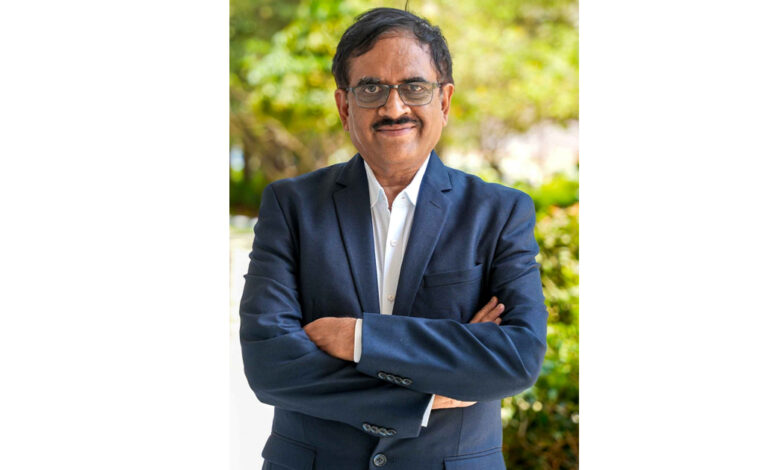
By – Satya Duvvuri, Professor of Practice, Paari School of Business, SRM University -AP
The Mahabharata tells us that true greatness lies not in renunciation but in transmission. Vyasa, after authoring the Mahabharata – also referred to as Panchamaveda, did not retreat into silence. He passed his wisdom to his son Shuka and to future generations, ensuring that knowledge became a living bridge rather than a forgotten treasure.


In the same way, today’s leaders must see retirement not as Vanaprastha — a withdrawal into wilderness — but as Vikasaprasthanam, a purposeful evolution where experience becomes mentorship, wisdom becomes guidance, and leadership becomes contribution.
Retirement has traditionally been viewed as a quiet exit — a gentle slowing down, a step away from responsibility, a cultural nudge toward Vanaprasthanam the age‑old stage of renunciation. In ancient times, this retreat into solitude made sense. But in today’s world, such withdrawal often leads to something unintended: the silent loss of decades of accumulated wisdom, institutional memory, and leadership insight.
The modern world demands a different response.
- A redirection.
- A reinvention.
This is where Vikasaprashanam enters the leadership vocabulary — a stage where senior professionals evolve from operational roles to roles of influence, mentorship, and ecosystem building. It is not an extension of work; it is an expansion of impact.
The Leadership Lessons Hidden in Everyday Encounters
When leaders step into unfamiliar environments — new geographies, new cultures, new rhythms — they often rediscover something essential. A simple conversation with a stranger, an unexpected connection, or a shared moment of recognition can reveal how much life still has to teach, even after a career has ended.
These encounters carry quiet but powerful lessons:
They show that networks can be built at any age. They remind us that curiosity is a lifelong asset. They prove that learning does not retire when the job does. They demonstrate that adaptation is not a compromise but a capability. And they reaffirm that relevance is a choice, not a function of age.
Such experiences prepare leaders for Vikasaprasthanam. They expand perspectives, soften boundaries, and rekindle the desire to contribute. They reveal that the world still has insights to offer — and that leaders still have value to give.
The Shift from Achievement to Contribution
In Vikasaprasthanam, leaders begin to see their experiences not as memories but as tools. Their insights become frameworks. Their stories become case studies. Their wisdom becomes direction.
This shift is not about continuing the same work. It is about evolving into work that uplifts, guides, and transforms.
And this evolution is critical today because India’s next growth curve depends not only on capital and technology, but on leadership that can shape talent, strengthen institutions, and inspire innovation.
India’s Unspoken Challenge: Unemployability
India’s demographic advantage is often celebrated, but beneath the surface lies a paradox:
Organizations struggle to find skilled talent. Universities produce degrees but not capabilities. Youth hold certificates but not confidence. Employers search for competence but find hesitation.
This is not unemployment. This is unemployability.
And unemployability cannot be solved by incremental improvement. It demands Disruptive Innovation — not only in technology, but in thinking, in education, and in leadership.
Where Vikasaprasthanam Becomes a Strategic Imperative
Senior leaders entering Vikasaprasthanam are uniquely positioned to drive this disruption.
They carry decades of lived wisdom. They understand how systems work — and why they fail. They know what industry needs — and what academia lacks. They have built teams, institutions, and cultures. They have seen cycles of success and decline. They have the maturity to guide without controlling.
Their restlessness becomes a strategic asset.
By channelling their experience into mentorship, ecosystem building, and institutional transformation, they can:
- help redesign education from degree‑oriented to skill‑oriented,
- strengthen industry‑academia collaboration,
- mentor young professionals and young faculty,
- inspire innovation at the grassroots,
- and guide youth toward meaningful careers within India.
This is how Vikasaprasthanam becomes a national force, not just a personal philosophy.
Charging India’s Youth for Amrit Kaal
India’s youth are ambitious, globally aware, and digitally native. But many are drawn to the West, believing opportunity lies elsewhere.
Leaders in Vikasaprasthanam can help them see the truth:
India is not behind the world. India is becoming the world’s next growth engine.
By sharing lived wisdom, shaping mindsets, and building confidence, senior leaders can help young Indians realize that the path to global leadership does not lie in migration — it lies in contribution.
This intergenerational bridge is essential for India’s journey toward becoming a global power by 2047.
Conclusion: The New Leadership Frontier
Retirement is not the end of leadership. It is the beginning of a new kind of leadership — quieter, deeper, more strategic.
- A leadership that grows through connection.
- A leadership that adapts through learning.
- A leadership that evolves through purpose.
- A leadership that disrupts through wisdom. A leadership that guides through experience.
The corporate world already has enough retirees. What it needs now are Vikasapurush — leaders who use the twilight of life to ignite the dawn of a new India. Too many, lacking direction or motivation, slip quietly into slumber. But the true calling of this stage is not withdrawal — it is awakening. It is the conscious choice to step into Vikasaprasthanam and transform restlessness into renewal.