Work–Life Balance During a PhD: Is It Really Possible?
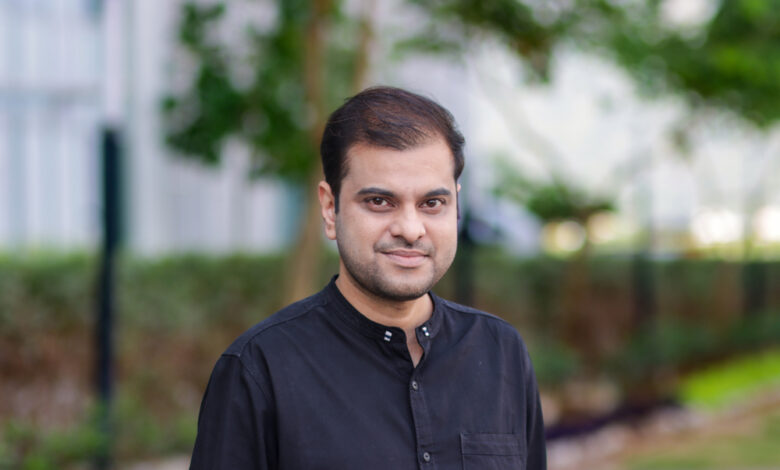
Dr Arijit Datta, Assistant Professor, Department of Electronics & Communication Engineering, SRM University-AP. ( Amaravati)
The journey of a PhD often extends far beyond the laboratory, classroom, or conventional working hours.

An unfinished experiment can remain in a scholar’s thoughts long after leaving the laboratory. Reviewer comments, approaching deadlines, research papers, and an incomplete thesis often find their way into personal time. As the boundary between academic responsibilities and personal life gradually becomes blurred, an important question emerges: Is it genuinely possible to maintain a healthy work–life balance during a PhD?
The Reality Behind the PhD Journey
A PhD is often viewed as an exciting journey of discovery, innovation, and intellectual growth. However, doctoral research is rarely straightforward or predictable. Experiments may fail, expected results may remain elusive, manuscripts may be rejected, and months of dedicated effort may sometimes lead to limited progress.Such experiences demand more than academic competence. They require patience, perseverance, adaptability, and emotional resilience.
The Pressure to Remain Productive
One of the most common challenges faced by PhD scholars is the persistent feeling that they should always be accomplishing something.There is invariably another article to read, another experiment to conduct, another dataset to analyse, or another chapter to refine. Consequently, even taking a well-deserved break may create an unnecessary sense of guilt.Yet constant work does not necessarily translate into greater productivity. Adequate rest and personal time can restore concentration, stimulate creativity, and improve the ability to approach complex research problems with a fresh perspective.
The Hidden Pressure of Comparison
Academic environments can easily encourage scholars to compare their progress with that of their peers. One researcher publishes several papers, another receives a prestigious fellowship, while someone else completes the doctorate earlier than expected.What often remains unseen are the failed experiments, rejected manuscripts, moments of uncertainty, and personal struggles behind those achievements.Every doctoral journey follows a different path. Excessive comparison can therefore generate unnecessary anxiety and gradually undermine confidence.
Finding a Sustainable Balance
Work–life balance does not imply dividing every day equally between research and personal life. Certain periods will naturally demand greater attention to experiments, publications, deadlines, or thesis writing.The more realistic objective is to establish a sustainable equilibrium.Spending meaningful time with family and friends, exercising, pursuing personal interests, obtaining adequate rest, and occasionally disconnecting from research are not indications of diminished commitment. Instead, they allow scholars to return to their work with renewed energy, clarity, and motivation.
The Role of Supervisors and Universities
Supervisors and academic institutions play an equally important role in shaping the doctoral experience. High academic standards are essential, but they should be accompanied by clear expectations, constructive feedback, encouragement, and effective mentorship.A supportive research environment can promote academic excellence while enabling scholars to develop confidence, independence, and a healthier approach to research.
Redefining Success in a PhD
The success of a PhD should not be measured exclusively by publications, citations, conference presentations, or awards. A doctorate should also cultivate independent thinking, resilience, intellectual curiosity, confidence, and the ability to navigate uncertainty.Perfect work–life balance may remain difficult to achieve, particularly during demanding phases of doctoral research. Nevertheless, a meaningful and sustainable balance is certainly possible.
Ultimately, the true accomplishment of a PhD lies not merely in completing a thesis or contributing new knowledge, but in emerging as a capable, resilient, and independent researcher without losing sight of the life that exists beyond research.