Depletion of Empathy and Resilience in a Politically Polarized Climate
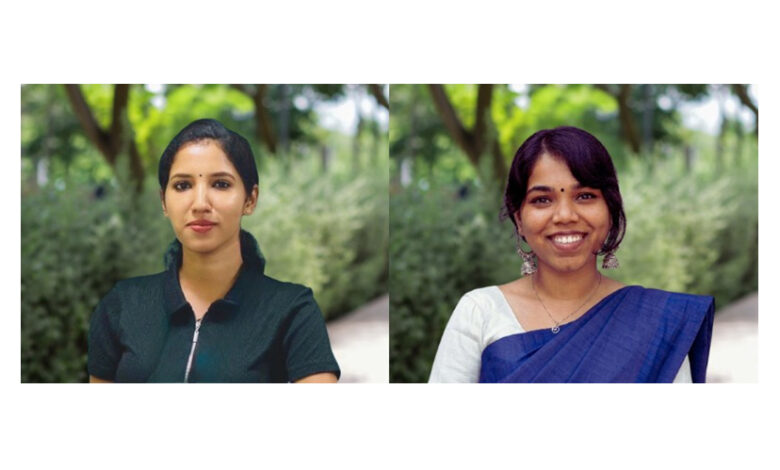
By- Adhishmaya E V and Dr Aswathy Gopi
Department of Psychology, SRM University AP

In the contemporary political landscape, we find ourselves trapped in a state of compassion fatigue because of the continuous news cycles and crisis overlap. The emotional numbness and detachment from the real political discourse are byproducts of compassion fatigue, which is caused by the prolonged exposure to political stress and moral urgency. The human empathic regulation system becomes overwhelmed when it is forced to process global suffering without interruption and rest. Today, the human activist Sonam Wangchuk, undergoing a hunger strike, tests the eroded empathy and a profound disconnect between the suffering of a citizen and the response of a polarized state.
Political stress is not just a political debate topic anymore. It is a chronic condition, low-level anxiety that taps into core human needs for safety and control. The brain interprets the out-of-hand political events as a state of constant threat and activates the limbic system, the “fight or flight” response. Which will result in a high alert state, which can result in compromised cognitive flexibility and become rigidity, which makes it difficult to see perspectives that are different than one’s own and empathize with another human being’s experience. This depleted empathy is often a result of constant stress. Maintaining empathy with people who have different opinions becomes difficult and takes a significant amount of emotional labor when political conversations become dehumanizing and hostile. Over time, individuals experience emotional numbness, avoiding political conversation and cynically detaching from public discourse to protect their own mental well-being. This disengagement is a signal that one’s capacity for empathy needs boundaries and support and not a personal failure of empathizing with another human being.
The ongoing hunger strike of Sonam Wangchuk at Delhi’s Jantar Mantar serves as a platform for us to think about how numb all of us are to the political emotions that are around us and how many of us are ready to engage ourselves with it. As of July 17, 2026, Wangchuk has entered the 20th day of a fast on water alone, having already lost over 9.5 kilograms. A renowned educator and climate activist, Wangchuk joined a protest spearheaded by the youth-led Cockroach Janta Party (CJP), a group named satirically after a Chief Justice referred to activists as “parasites” and “cockroaches”. The demands of Wangchuk are rooted in moral urgency: the resignation of Education Minister Dharmendra Pradhan following the NEET-UG 2026 paper leak, which affected over 2.2 million candidates and led to at least eleven student suicides. He also demands a constitutional safeguard for Ladakh under the Sixth Schedule, which is a special set of rules designed to protect the lands, culture, and traditions of tribal communities. It provides self-governing powers by creating Autonomous District Councils (ADCs), noting that without these protections the region’s land and resources are vulnerable to unregulated acquisition. The officials have refused to comment on the case, and Minister Pradhan has dismissed the strike as a “B-team of disruptive elements.” When citizens’ life-threatening sacrifices are reduced to political maneuvering, it shows the clinical manifestation of compromised empathy among the highest levels of power. This particular case gives us a clear picture of how the current government navigates a polarized climate. In 2011, when activist Anna Hazare underwent 12 days of hunger strike for the Jan Lokpal Bill, the governing Congress-led government engaged directly with the protesters, and in contrast, the current ruling government remains unresponsive to the protest, and it shows how the centralized authority showcases the muscular brand of nationalism. When the BJP was in the opposition, they backed Anna Hazare’s protest, and critics are labeling this silence as “pure hypocrisy”.
Climate activist and educator Sonam Wangchuk addresses a press conference at Lodhi Estate in New Delhi on March 17, 2026. | Photo Credit: SHASHI SHEKHAR KASHYAP.
Critics also call out how the population has been lacking empathy by emphasizing the incident where a food vlogger joked about the snacks being served at the protest site while Wangchuk was starving and labeled this behavior as “morally deranged” and have been questioning how someone could lose such a “shred of humanity”. We are risking our ability to witness human pain without judgment when the political stress causes us to view every event through a partisan lens. Sustaining empathy in a polarized world is about bounded compassion and not about unlimited access to one’s emotional responses. The individual must regulate their nervous system and notice signs of physiological activation, like shallow breathing, before engaging in political discussions to remain grounded in situations like these. Being curious and understanding the opposite viewpoints by asking open-ended questions instead of having assumptions and reacting would help in understanding the political landscape better. This creates a space for thoughtful engagement rather than having an overwhelmed reaction. Today, reclaiming empathy is looking past the “disruptive elements” label and seeing the “ordinary citizen” who is trying to accomplish his responsibilities and also means to acknowledge the shared mental health challenges that political stress brings to the individuals, regardless of their political identity and party affiliation. Our national capacity for empathy is being questioned when Sonam Wangchuk’s health is deteriorating each day. When the public becomes numb to the suffering of students and marginalized communities and when the government remains silent to a citizen on the brink of death, democracy is beginning to be decimated.
Choosing enduring engagement and resisting the urge to think in “black and white” and fighting for the truth that acknowledges the dignity of every individual is how to remain human in a world that asks us to witness constant distress. Wangchuk himself stated, “India does not need heroes to lead; it needs citizens to awaken their own conscience and become the ‘heroes’ of their own lives.” Regardless of the political stance, sustaining empathy and bridging the divides that separate us and enduring the pursuit of truth should remain at the heart of the nation.